
Before starting the year in your business, planning your pending projects is important. Projects bring progress and help reach your goals. At the start of the year, it’s smart to finish pending work. You need to manage these projects to achieve your goals for the whole year.

Here are four things to think about when planning your projects:
- Understand Your Unfinished Work from the year ending (or the previous quarter): Know what projects are waiting to be completed. Understand what needs to be done for each project.
- Match Projects with Goals: See if your pending projects help with your business goals. Make sure they fit the plan you have for your business.
- Keep Up with Trends: Know what’s new in your field. Look at what other businesses are doing with their projects.
- Make a Project Calendar: Plan when you’ll work on each project. This helps you know what to do and when to do it. It’s good to plan ahead so you can finish projects faster.
Now, let’s go into detail about these four components because planning your pending projects for the start of the year needs good thinking and getting ready. Make sure your pending projects fit your business goals. With these tips, you’ll finish your projects and reach your goals for this part of the year and the rest.
In business, pending projects often hold the key to unlocking growth, innovation, and success. These projects, suspended in the balance between idea and execution, represent untapped potential waiting to be unleashed. However, their success is about more than just completion but strategic management, goal alignment, and timely execution.
Understanding the Power of Pending Projects
Pending projects encompass a spectrum of initiatives awaiting action or closure within an organization. From unfinished campaigns to product launches or system upgrades, these projects carry substantial weight in shaping a company’s trajectory. They could be the next breakthrough innovation, a significant revenue booster, or a vital process enhancement. However, their status quo often stems from limited resources, shifting priorities, or evolving market conditions.
How to prioritize unfinished projects? This process involves assessing their importance and urgency to determine which ones need immediate attention. Here’s a step-by-step guide to help prioritize unfinished projects:
Here is a checklist of what I am going to discuss in detail:
- List and Review: Make a comprehensive list of all pending projects. Review their current status, deadlines, and impact on business goals.
- Assess Impact: Evaluate the impact each project has on the business. Consider factors like revenue generation, customer satisfaction, or strategic significance.
- Urgency Evaluation: Determine the urgency of each project. Projects with pressing deadlines or impending consequences should take precedence.
- Resource Availability: Assess the resources required to complete each project. Consider manpower, budget, and tools necessary for execution.
- Strategic Alignment: Align projects with current business goals and objectives. Prioritize projects that contribute directly to strategic objectives or long-term growth.
- Risk Analysis: Identify projects that carry high risks if left unresolved. Projects with potential negative implications should be prioritized accordingly.
- Impact on Other Projects: Evaluate how completing a project might positively influence or unblock other pending tasks or initiatives.
- Consult Stakeholders: Involve relevant stakeholders or team members to gather insights on pending projects’ importance and potential impact.
- Time Sensitivity: Consider the time-sensitivity of each project. Projects pending for longer durations might need attention to avoid further delays.
- Create a Priority Matrix: Use a priority matrix or scoring system to rank projects based on importance, urgency, and impact criteria.
Now, let’s begin:
Prioritizing Pending Projects: A Strategic Approach
Identifying the right projects to prioritize is pivotal. Some projects might align more closely with immediate revenue generation, while others could be crucial for long-term growth.
Evaluating Potential ROI
Projects that promise a substantial Return on Investment (ROI) should rank high on the priority list. Assess their potential to bring in revenue, reduce costs, or enhance operational efficiency. Quantifying the potential gains helps in making informed decisions.
Analyzing Alignment with Business Objectives
The projects aligning most closely with the core business objectives should take precedence. Consider how each project contributes to the overarching mission and vision. Th projects that directly support or enhance these objectives are often more critical for business success.
Weighing Resource Requirements
Projects that require minimal resources but promise significant returns might merit immediate attention. Conversely, high-resource projects need careful consideration to ensure optimal allocation without compromising ongoing operations.
Optimizing Resource Allocation and Timelines
Strategic Resource Distribution
Once priority projects are identified, smartly allocate resources. Ensure teams are aligned and equipped to tackle these projects efficiently. Consider leveraging cross-functional teams to optimize resource utilization and expertise.
Setting Realistic Timelines
Establishing realistic timelines is crucial because delays can hinder project success. Review past project timelines to set achievable deadlines. Factor in contingencies, dependencies, and potential roadblocks. Creating a buffer in the schedule can mitigate unforeseen challenges.
Implementing Agile Methodologies
Consider adopting agile methodologies for project execution. Breaking larger projects into smaller, manageable tasks allows for iterative development, enabling quicker responses to changes and a more adaptable approach.
Impact on Business Growth
Business Implications of Pending Projects
Unresolved tasks can cast a shadow over business productivity and success. They often result in a cascading effect that touches various aspects of a company’s operations. Projects left hanging impact not only immediate tasks but also the overall productivity, revenue generation, and customer satisfaction.
By systematically assessing these factors, you can create a priority order for your unfinished projects, ensuring that resources are allocated efficiently and critical tasks are addressed promptly.
Communication Strategies and Monitoring Mechanisms for Project Success
Effective Communication Channels
In any project, clear and consistent communication is the backbone of success. Establishing efficient communication channels ensures that everyone involved is on the same page and working towards shared objectives.
But , how to do it?
Here are some tips for you:
Regular Meetings: Conduct periodic meetings to discuss project status, challenges, and next steps. These meetings serve as a platform for team members to voice concerns, share updates, and align efforts.
Collaboration Tools: Utilize digital collaboration tools for seamless communication. Platforms like Slack, Microsoft Teams, or project management software enable real-time discussions, file sharing, and updates, fostering smoother workflows.
Reporting: Establish a clear reporting structure outlining roles, responsibilities, and reporting lines. This structure ensures accountability and facilitates effective communication flows within the project team.
Monitoring and Feedback:
Monitoring project progress is vital to ensure alignment with business goals and timely completion. Implementing robust monitoring mechanisms allows for course correction and proactive resolution of issues.
Key Performance Indicators (KPIs): Define and monitor KPIs to track project progress and success. These measurable metrics provide insights into whether the project is meeting predetermined goals and allow for timely adjustments.
Regular Progress Reports: Request and analyze progress reports at defined intervals. These reports should highlight achievements, challenges, and deviations from the project plan, enabling timely intervention.
Feedback: Establish feedback loops for continuous improvement. Encourage open feedback from team members, stakeholders, and customers. Addressing feedback promptly helps refine project strategies and outcomes.
Alignment with Business Goals
Every project should align with overarching business objectives to ensure that its outcomes contribute meaningfully to organizational growth.
Goal Alignment Assessment: Regularly assess project alignment with broader business objectives. Verify that project outcomes serve the company’s strategic vision and contribute to its growth trajectory.
Adaptation: Remain flexible and open to adaptations if project goals deviate from overarching business objectives. Swiftly adjust project strategies to realign with changing organizational priorities.
Continuous Improvement: Conduct continuous evaluations to gauge project alignment. This evaluation involves comparing project milestones and outcomes against business goals, facilitating adjustments and recalibrations.
By implementing this communication strategies, integrating effective monitoring mechanisms, and ensuring alignment with overarching business objectives, projects stand a greater chance of success. These measures drive project completion and contribute significantly to the business’s overall growth and success.
Lastly, the Project Calendar for your Business.
Creating a project calendar involves a few simple steps:
- List Your Projects: Start by listing all the projects you need to work on. Make sure you’ve got them all down.
- Set Priorities: Figure out which projects are most urgent or critical. Consider deadlines, impact on goals, or client needs to prioritize effectively.
- Allocate Time: Assign time slots for each project on your calendar. Be realistic about how much time each task will take.
- Use Tools: There are various tools and apps available to create project calendars. You can use software like Microsoft Excel, Google Sheets, or project management tools like Trello or Asana. (Trello my favorite one)
- Review and Update: Regularly review and update your project calendar as needed. Things might change, so stay flexible and adjust accordingly.
Remember, the key is ensuring your calendar reflects your workload’s reality and helps you manage your time effectively.
This is the HOW to Do It in Trello using the Kanba Methodology:
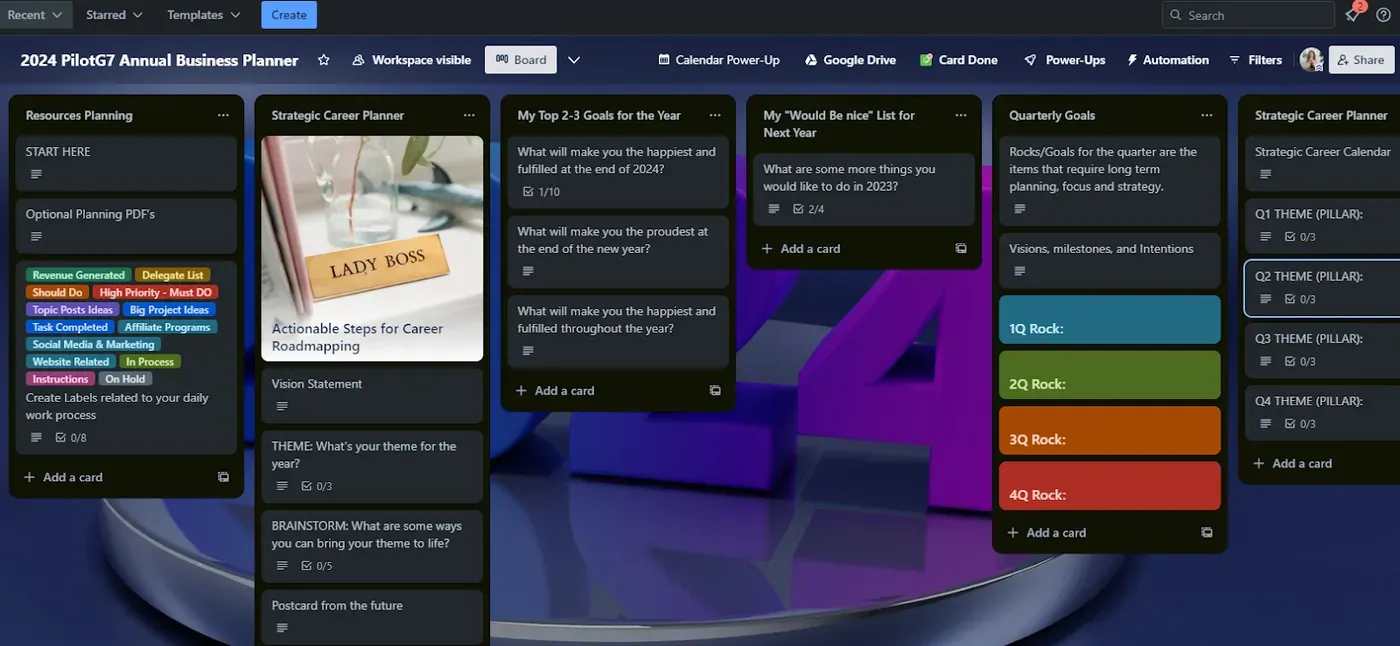
Create Boards: In Trello, each project or task gets a board. Boards are like big buckets where you organize your tasks.
Make Lists: Within each board, make lists. Lists represent stages or steps in your project. For instance, “To-Do,” “In Progress,” and “Done.”
Add Cards: Each task or project is a card. Add cards to your lists. These cards hold details like descriptions, due dates, and checklists.
Move Cards: As you work on tasks, move cards across lists. Start from “To-Do,” move to “In Progress” when you’re working on it, and finally to “Done” when it’s finished.
Visualize Workflow: The board gives a visual representation of your workflow. You can see what’s pending, what’s being worked on, and what’s completed.
Trello’s Kanban board system is like a digital whiteboard with sticky notes. It’s an intuitive way to manage tasks and projects, allowing you to track progress easily, and I LOVE IT.
Conclusion
So, when we talk about unfinished jobs in a business, it’s not just about finishing them. It’s about making the business grow better. These tasks are like important puzzles for a company. Understanding why they matter and how they affect things, and then finding good ways to manage them, helps a business do well.
By knowing how these tasks work and handling them smartly, a business can solve problems and grab chances to do better. Every part of dealing with these jobs, like deciding which is most important, using resources well, and doing things at the right time, helps a business grow.
These jobs can slow down a business if they’re not managed right, affecting how much a business can do and how it compares to others. But if a business uses these tasks to get better, it can turn tough times into opportunities for growth.
The secret is in how a business plans and handles these tasks. When a business understands their worth, guides them carefully, and makes sure they match its big plans, that’s when a business gets stronger, step by step.
Developing a Q1 content strategy requires careful planning and preparation to be successful. Creating a successful content strategy requires you to never stop learning about your target audience, ensuring your business mission is reflected in your content. With these tips, your content will reach your goals this quarter and the next.
Take care and los veo pronto
Adalyd